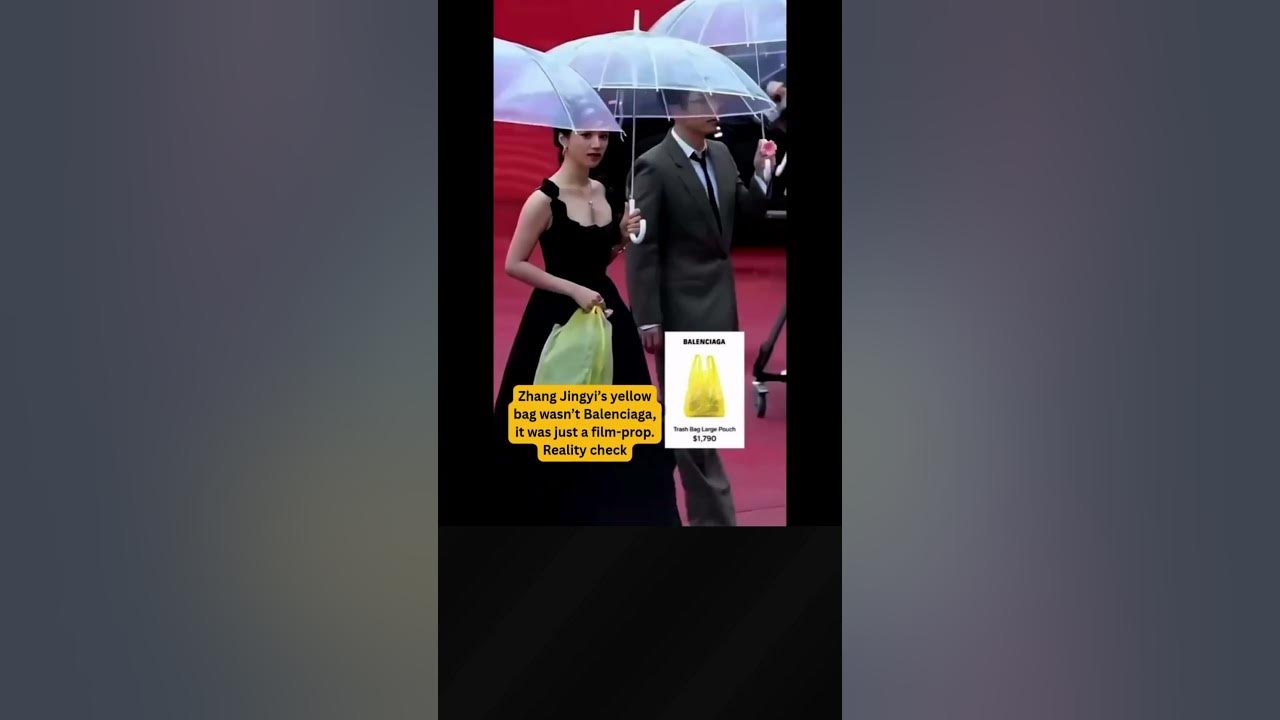
The Viral Sensation: Zhang Jingyi's Yellow Bag and the Balenciaga Rumor Mill
In the whirlwind world of celebrity fashion, a single accessory can ignite a global conversation, sparking debates ranging from artistic expression to commercial absurdity. Such was the case when Chinese actress Zhang Jingyi was photographed with a seemingly ordinary yellow plastic-looking bag. The image, depicting her elegant presence alongside a decidedly mundane accessory, quickly went viral, fueling immediate speculation that this humble item was, in fact, an audacious new creation from none other than the luxury powerhouse Balenciaga. The rumor mill spun into overdrive, suggesting the 'pouch' was valued at an astonishing $1,790, leading many to question: Balenciaga Sacola Amarela É Verdade, or was this just another case of fashion folklore?
Zhang Jingyi, known for her captivating roles and sophisticated style, appeared on a red carpet for an event, resplendent in a classic black princess-cut gown. Her hair elegantly swept back, she completed her ensemble with a clear plastic umbrella – and a distinctive yellow bag made of a similar transparent, crinkled material. It was this bag, with its uncanny resemblance to a common market or trash bag, that seized public attention. The stark contrast between her high-fashion attire and the bag's utilitarian aesthetic immediately triggered comparisons to Balenciaga's well-documented history of transforming everyday objects into high-priced luxury statements.
Balenciaga's Legacy of "Everyday Luxury" and the Real "Trash Bag" Pouch
To understand why the yellow bag quickly became attributed to Balenciaga, one must first delve into the brand's contemporary identity under creative director Demna Gvasalia. Balenciaga has, for years, masterfully blurred the lines between high fashion and the mundane, challenging traditional notions of luxury. Their collections have famously featured items inspired by everything from IKEA shopping bags and Crocs to distressed sneakers and even laundry bags. This disruptive approach aims to provoke thought, question consumerism, and elevate the ordinary to the extraordinary.
One of Balenciaga's most notorious actual releases was the "Trash Pouch," unveiled as part of their Fall/Winter 2022 collection. This accessory, crafted from calfskin leather and deliberately designed to resemble a crumpled garbage bag, was indeed priced at $1,790. It came in several colors, including black, white, and blue, but notably, a specific bright yellow version mimicking a plastic trash bag was not among its official debut forms. The "Trash Pouch" garnered immense media attention and divided opinions sharply: some lauded it as a stroke of genius, a poignant commentary on consumer culture, while others decried it as an egregious example of luxury brands pushing boundaries too far, charging exorbitant prices for items that seemed to mock their clientele.
The viral posts circulating about Zhang Jingyi's yellow bag often intertwined the factual existence of Balenciaga's high-priced "Trash Pouch" with the visual of her accessory, creating a compelling, yet ultimately misleading, narrative. The question wasn't just "what is she carrying?" but rather "is this the latest boundary-pushing stunt from Balenciaga?" The brand's reputation for audacity lent immediate credibility to the rumor, no matter how outlandish it seemed.
Unmasking the Truth: Was Zhang Jingyi's Bag Really Balenciaga?
Despite the rapid viral spread and intense debate, the definitive answer to the question, "Balenciaga Sacola Amarela É Verdade?" regarding Zhang Jingyi's specific yellow bag is a clear no. While Balenciaga undeniably released a "Trash Pouch" that costs $1,790 and pushes similar conceptual boundaries, Zhang Jingyi's yellow bag was not a Balenciaga product.
The confusion arose from a confluence of factors: Balenciaga's established pattern of transforming everyday objects, the striking resemblance of Zhang Jingyi's bag to common plastic items, and the public's eagerness to engage with viral content, especially when it involves luxury and perceived absurdity. The narrative was simple yet potent: a luxury brand sells a trash bag for thousands of dollars, and a celebrity is seen sporting it. This made for an irresistible, shareable story.
The truth, however, is more nuanced. Zhang Jingyi's bag, while visually similar to a crinkled yellow plastic bag, was an independent styling choice for the event. It was not the calfskin "Trash Pouch" from Balenciaga. The rumor underscored how quickly visual resemblances, combined with a brand's known eccentricities, can snowball into widely accepted, yet incorrect, facts across social media. For a deeper dive into the specific myth surrounding the yellow trash bag, you can explore Balenciaga Yellow Trash Bag: Debunking the $1790 Viral Myth.
The Psychology of Luxury: Why We Fall for the Hype
The viral phenomenon of Zhang Jingyi's yellow bag and its Balenciaga attribution highlights a fascinating aspect of modern luxury consumption and digital culture. Brands like Balenciaga often thrive on controversy, using provocative designs not just to sell products, but to generate conversation, challenge norms, and cement their status as innovators, even if it means being misunderstood or ridiculed by some. This strategy works because it taps into several psychological triggers:
- Exclusivity through Absurdity: If a brand can convince consumers to pay thousands for a 'trash bag,' it signals immense brand power and creates a sense of belonging for those who 'get it' – a niche luxury.
- Questioning Value: Such designs force a re-evaluation of what makes something "luxurious." Is it material, craftsmanship, brand name, or conceptual audacity?
- Social Commentary: Many perceive these designs as an artistic critique of consumerism, wealth, and the fashion industry itself, adding intellectual weight to the purchase.
- Viral Loop: The sheer absurdity of an item like a $1,790 'trash bag' makes it inherently shareable, driving brand awareness far beyond traditional marketing campaigns.
The misattribution with Zhang Jingyi's bag further illustrates how quickly narratives can be created and amplified online, often overshadowing factual accuracy in favor of a more engaging story. It speaks to our collective fascination with the opulent and the outrageous, especially when it challenges our understanding of value.
Navigating Fashion Fads and Viral Rumors: Tips for Consumers
In an age where social media is a primary source of fashion news and trends, it's crucial for consumers to develop a discerning eye. The Zhang Jingyi Balenciaga rumor serves as an excellent case study on why critical thinking is essential when encountering viral fashion content. Here are some practical tips for navigating similar situations:
- Fact-Check the Source: Before sharing or believing a viral post, check reputable fashion news outlets, brand official websites, or trusted fact-checking organizations. A quick search for "Balenciaga yellow trash bag" would reveal the truth about the actual Balenciaga product versus the viral image.
- Understand Brand Ethos: Familiarize yourself with a brand's typical design philosophy. Balenciaga under Demna *does* push boundaries, making such rumors plausible, but even audacious brands have their limits and specific product lines.
- Distinguish Between Inspiration and Duplication: An item might be *inspired* by a common object without being a direct, luxury-priced duplicate. Zhang Jingyi's bag, regardless of its origin, was clearly drawing from a utilitarian aesthetic.
- Consider the Context: Often, images are taken out of their original context. Was it a runway show? A conceptual art piece? Or a celebrity simply making a bold personal style statement?
- Beware of Price Tag Shock: While luxury items can be astronomically priced, always verify specific dollar figures attached to viral items. Exaggerated prices often accompany fabricated stories to maximize impact.
The debate around Balenciaga's 'Trash Pouch' and similar designs is ongoing. Is it truly art, or merely an exaggeration? This very question is explored further in Balenciaga's 'Trash Bag' Pouch: Art, Exaggeration, or Fake? Understanding the line between genuine innovation and viral fabrication is key to being a well-informed fashion enthusiast.
The saga of Zhang Jingyi's yellow bag and the Balenciaga connection ultimately serves as a powerful reminder of how easily misinformation can spread in the digital age, especially within the captivating realm of celebrity and luxury fashion. While Balenciaga is indeed renowned for its provocative designs that transform the mundane into the extravagant, the specific yellow plastic-looking bag seen with Zhang Jingyi was not their creation, nor was it the $1,790 "Trash Pouch." The incident highlights the critical importance of media literacy and fact-checking, even when faced with stories that seem too wild to be true – or perhaps, precisely because they seem so. In fashion, as in life, not everything that glitters, or even crinkles like a plastic bag, is gold.