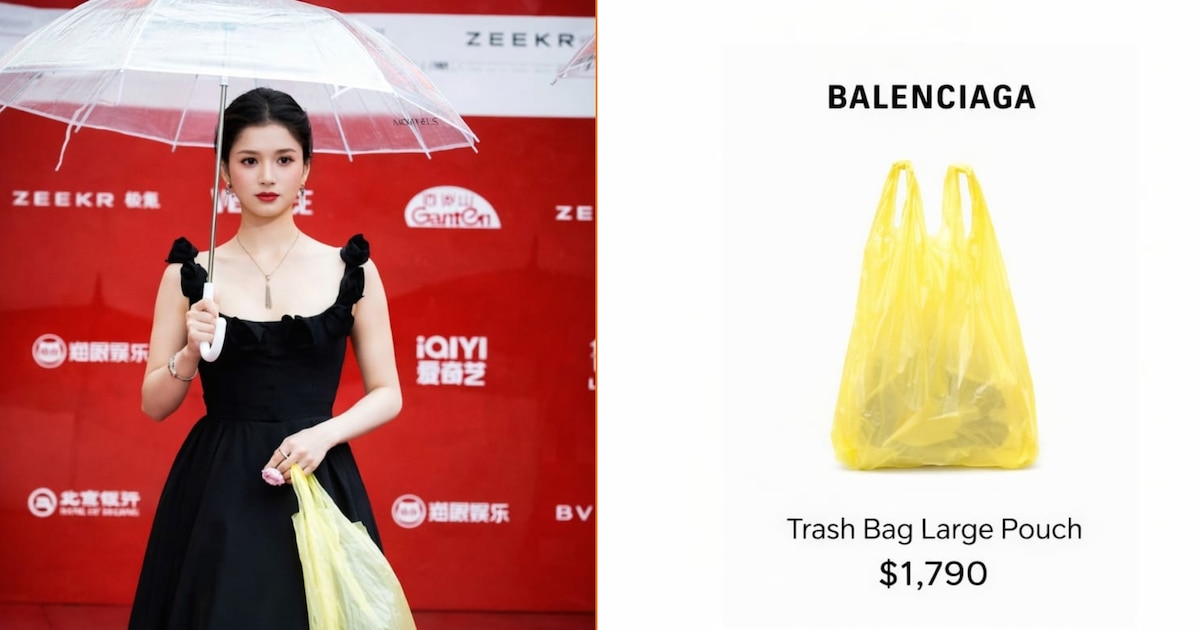
The world of high fashion often dances on the edge of the avant-garde, pushing boundaries that sometimes blur the line between art and everyday absurdity. Few brands embody this provocative spirit quite like Balenciaga. Over the past few years, the luxury powerhouse has repeatedly turned mundane objects into high-priced designer items, sparking fierce debate and endless internet memes. One such controversy recently exploded across social media: the supposed launch of a "Balenciaga Yellow Trash Bag" pouch, purportedly costing a staggering $1790.
Images of a simple, crinkled yellow plastic bag—the kind you might find in a supermarket or holding your household waste—were circulated, attributed to the esteemed Spanish fashion house. The accompanying narrative often included the astonishing price tag, leading to widespread disbelief, outrage, and a healthy dose of confusion. People questioned whether it was a brilliant commentary on consumerism, a cynical joke, or simply a sign that the fashion world had lost its collective mind. The question echoing across social media, particularly in Portuguese-speaking communities, has been: "Balenciaga Sacola Amarela É Verdade?" (Is the Balenciaga Yellow Bag True?). This article aims to debunk the viral myth, clarify the truth, and explore Balenciaga's audacious design philosophy.
The Viral Sensation: A Yellow Bag Stirs the Fashion World
The story gained incredible traction, fueled by posts describing a Balenciaga "pouch" valued at US$1,790 (over R$9,000 in Brazil). What made this alleged release so captivating was its uncanny resemblance to an ordinary yellow plastic shopping or trash bag. The visual simplicity, starkly contrasting with an astronomical price, instantly divided opinions. On one side, admirers praised the brand's creative audacity and disruptive concept, hailing it as a genius artistic statement. On the other, critics lambasted the exorbitant cost for an item that emulated such a trivial, commonplace object.
The controversy was amplified by images circulating of Chinese actress Zhang Jingyi attending an event with a similar-looking yellow plastic bag. This sight inadvertently cemented the false attribution for many, leading them to believe that this was indeed the infamous Balenciaga item. The debate quickly became a global phenomenon, reigniting fundamental questions about the limits of artistic innovation versus commercial exaggeration in the luxury fashion industry. It highlighted the ongoing discussion about the perceived value added by design in high-end products, especially when the aesthetics intentionally mimic the lowliest of everyday items.
The internet was awash with comments ranging from "My mother has several of these at home!" to "Is this a luxury bag or a market bag?" These reactions perfectly encapsulated the essence of the viral sensation – a deliberate provocation that challenges our understanding of value, status, and what constitutes "luxury."
Unpacking the "Balenciaga Sacola Amarela É Verdade" Myth
So, let's get straight to the burning question: Balenciaga Sacola Amarela É Verdade? Is it true that Balenciaga sold the specific yellow plastic bag, resembling a trash or shopping bag, for $1790? The straightforward answer is: no, not exactly in the way it went viral.
While Balenciaga is undoubtedly known for its audacious reinterpretations of everyday items, the specific *yellow plastic bag* seen with actress Zhang Jingyi and widely circulated online, purporting to be a $1790 Balenciaga "pouch," is not an authentic Balenciaga product. This particular viral image and its attribution are a clear instance of misinformation.
However, the myth isn't entirely baseless, which is why it gained such convincing traction. Balenciaga did, in fact, launch a controversial accessory named the 'Trash Pouch' as part of its Fall/Winter 2022 collection. This 'Trash Pouch' (officially titled 'Trash Bag Large Pouch') is a luxury bag designed to resemble a garbage bag. It is made from luxurious calfskin leather with a subtle sheen and crinkled texture, meticulously crafted to mimic the appearance of a disposable bin liner. This authentic Balenciaga item comes in various colors, including black, white, and blue, and indeed carries a hefty price tag, hovering around the aforementioned $1790.
The confusion arose because the existence of Balenciaga's actual 'Trash Pouch' made the viral yellow bag story seem plausible. The public, already familiar with Balenciaga's penchant for turning mundane objects into luxury goods, readily believed that a yellow plastic bag could be their next ironic creation. The key distinction, however, is that the 'Trash Pouch' is a deliberately designed and crafted leather item, whereas the viral yellow bag was a simple plastic accessory mistakenly attributed to the brand. To clarify further, for more on Balenciaga's real 'Trash Pouch' and its controversial existence, you might want to read Balenciaga's 'Trash Bag' Pouch: Art, Exaggeration, or Fake? And to delve deeper into the specific images of Zhang Jingyi and her accessory, check out Zhang Jingyi's Yellow Bag: Is it Balenciaga's $1790 Pouch?
So, while the idea of Balenciaga selling a luxury item that looks like a trash bag for $1790 is true, the viral specific yellow plastic bag itself is not the Balenciaga 'Trash Pouch'. It's a classic case of a kernel of truth being distorted and exaggerated through viral content.
Balenciaga's Provocative Play: Luxury in the Mundane
Understanding why the "Balenciaga Yellow Trash Bag" myth became so believable requires a deeper dive into the brand's design philosophy under Creative Director Demna Gvasalia. Demna has consistently challenged traditional notions of luxury, often drawing inspiration from the most unexpected and seemingly unglamorous aspects of everyday life. This approach isn't merely about shock value; it's a deliberate artistic statement and a critique of consumer culture.
Balenciaga's history is replete with examples of transforming the mundane into the magnificent (and expensive):
- The 'Trash Pouch': As discussed, this calfskin leather bag meticulously replicates a crumpled garbage bag, costing nearly $2000. It's a direct commentary on value, disposability, and the allure of branding.
- The IKEA Frakta Bag: Balenciaga famously released a blue leather tote that bore an uncanny resemblance to IKEA's ubiquitous, 99-cent polypropylene shopping bag. Their version, however, retailed for over $2,000.
- Crocs Collaborations: The brand elevated the famously polarizing plastic clog, adding platforms and embellishments, turning a casual, utilitarian shoe into a runway statement piece with a designer price tag.
- DHL T-shirts: Another iconic moment was when Demna created a T-shirt featuring the logo of the global courier service DHL, selling it for hundreds of dollars, transforming a uniform into a coveted fashion item.
This provocative strategy serves several purposes. Firstly, it generates immense buzz and media attention, keeping Balenciaga at the forefront of fashion discourse. Secondly, it critiques the very concept of luxury, questioning whether true value lies in craftsmanship, exclusivity, or the designer's ability to imbue an ordinary object with new meaning and context. It forces consumers and critics alike to ponder: if a simple plastic bag is replicated in fine leather and carries a designer label, does its inherent "trashiness" disappear, or does it become an ironic symbol of anti-luxury luxury?
Demna's vision is about finding beauty and commentary in the overlooked, challenging the conventional aesthetic codes of high fashion. By taking an item as universally recognized yet dismissed as a trash bag, Balenciaga elevates it, making it a conversation piece about wealth, waste, and artistic expression. It's a powerful, if controversial, exploration of "luxury in the common" – transforming something super basic into an item of high fashion and even higher value, albeit one that always sparks the thought, "I could get this at the corner store."
Navigating Fashion Myths and Misinformation: Tips for Consumers
The viral "Balenciaga Yellow Trash Bag" saga serves as a potent reminder of how quickly misinformation can spread in the digital age, especially when it involves a brand known for its boundary-pushing designs. For consumers navigating the often-bizarre world of luxury fashion, critical thinking and a discerning eye are more important than ever. Here are some practical tips to help you distinguish between genuine innovation and mere internet fabrication:
1. Verify Official Sources
The most reliable way to confirm a product's authenticity is to check the brand's official website. Balenciaga, like other major fashion houses, features all its current and past collections on its official site. If a viral item isn't there, it's highly likely to be fake or misattributed.
2. Cross-Reference Reputable Fashion News Outlets
Major fashion launches are always covered by established fashion magazines (e.g., Vogue, WWD, Business of Fashion) and reputable news organizations. Look for multiple, independent sources confirming a product's existence before believing a single viral post.
3. Understand Brand DNA
Familiarize yourself with a brand's established design ethos. While Balenciaga is known for its provocative, everyday-turned-luxury items, every brand has a distinct signature. If an item seems radically out of character for a brand, exercise caution.
4. Scrutinize Details
Luxury items, even those designed to look "trashy," typically feature impeccable craftsmanship, high-quality materials, and distinctive branding (tags, hardware, stitching). A truly authentic Balenciaga 'Trash Pouch' is made from calfskin, not actual plastic, and has specific design elements not found in a generic bag.
5. Be Wary of Exaggerated Claims and Unverified "Leaks"
Viral content often thrives on sensationalism. If a story seems too outrageous to be true, it very well might be. Be skeptical of unverified screenshots, blurry images, or "leaks" that don't come from official channels.
6. Recognize the Role of Satire and Memes
The internet loves to meme. Many viral fashion "items" start as satire or humorous edits that are then mistakenly taken as real. Understand the context in which content is shared. Sometimes, people create fake luxury items purely for comedic effect, which then circulates as fact.
By applying these critical steps, you can avoid falling victim to misinformation and better appreciate the genuine artistry and marketing genius behind brands like Balenciaga, rather than being misled by fabricated stories.
In conclusion, the viral story of the "Balenciaga Yellow Trash Bag" pouch for $1790 is largely a myth. While Balenciaga did create a genuine 'Trash Pouch' (a calfskin leather bag mimicking a garbage bag, priced similarly, and available in various colors), the specific yellow plastic bag seen circulating and attributed to actress Zhang Jingyi is not an official Balenciaga product. This incident perfectly illustrates how Balenciaga's audacious approach to luxury fashion – transforming the mundane into covetable, high-priced items – makes such sensational stories believable, even when they are not entirely true. Ultimately, the debate highlights the fascinating and often controversial intersection of fashion, art, and public perception, reminding us all to question what we see and verify what we believe in the ever-evolving landscape of digital information.