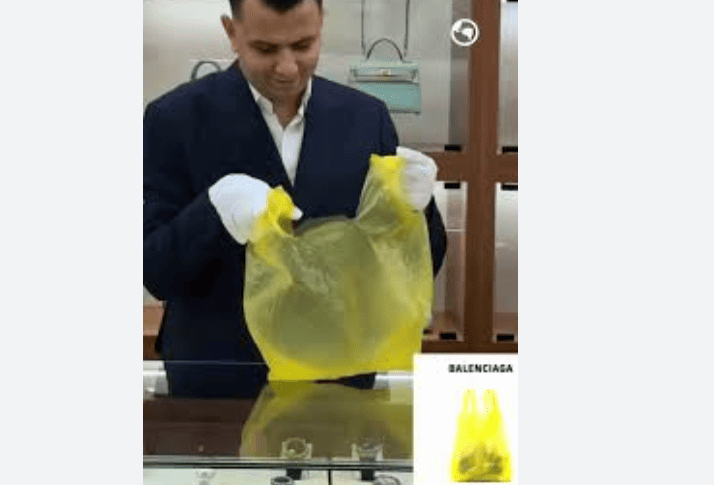
The Viral Sensation: A Yellow "Trash Bag" for $1,790? Dissecting the Balenciaga Myth
The world of luxury fashion is no stranger to controversy and head-turning designs, but few stories have captured the internet's imagination quite like the alleged Balenciaga "trash bag" pouch. Social media platforms erupted with images and discussions surrounding a bright yellow, seemingly disposable bag, rumored to be a Balenciaga creation retailing for an astronomical US$1,790 (over R$9,000). The viral question,
Balenciaga Sacola Amarela É Verdade (Is the Balenciaga Yellow Bag True?), quickly became a hot topic, sparking heated debates among fashion enthusiasts and critics alike.
Online posts described a "pouch" that faithfully replicated the look of a simple yellow plastic bag, leading to immediate polarization. Some lauded the brand's audacious creativity and disruptive concept, praising its ability to elevate the mundane into high art. Others, however, scoffed at the exorbitant price tag for an item that visually mimicked an everyday household object, questioning the very definition of luxury and the limits of commercial exaggeration. This phenomenon highlighted a recurring characteristic in recent fashion collections: the stark contrast between extreme visual simplicity and an exceptionally high market value. But what's the real story behind this captivating claim? Was Balenciaga truly selling a yellow trash bag, or was there more to this viral sensation than met the eye?
Unpacking Balenciaga's Actual "Trash Pouch" Collection
While the specific viral claim about a *yellow* trash bag turned out to be a misattribution, Balenciaga *did* indeed launch an accessory that deliberately blurs the lines between common utility and high fashion: the "Trash Pouch" collection. Unveiled as part of Demna Gvasalia's Fall/Winter 2022 collection, this design cemented the brand's reputation for conceptual and provocative pieces.
However, the reality of the Balenciaga Trash Pouch is distinct from the viral yellow image. The actual collection features a luxurious calfskin leather bag, meticulously crafted to *resemble* a drawstring trash bag. It was released in several colors, including classic black, pristine white, and a vibrant blue – but notably,
not in yellow. The genuine Balenciaga Trash Pouch carries a price tag consistent with other high-end accessories from the brand, approximately US$1,790.
The genius, or perhaps the audacity, of the Trash Pouch lies in its material contrast. What appears to be cheap, crinkly plastic is, in fact, supple and expensive leather, demonstrating an extraordinary level of craftsmanship and design. This intentional dissonance is a hallmark of Balenciaga under Demna, challenging consumers to reconsider their notions of value, aesthetics, and luxury. The concept is rooted in transforming the "super basic" into a high-fashion item, turning an object that "my mom has several of at home" into a coveted statement piece. This is where the core of the debate lies: is it a playful subversion of luxury norms, or simply an overpriced jest? For a deeper dive into the specifics, you can check out
Balenciaga Yellow Trash Bag: Debunking the $1790 Viral Myth.
Zhang Jingyi's Yellow Bag: A Case of Mistaken Identity?
Much of the viral fuel behind the "yellow trash bag" myth can be traced back to images of Chinese actress Zhang Jingyi. She was photographed at an event, notably "Illuminame, Principessa," carrying a distinct yellow plastic bag. This accessory, while visually unassuming and resembling a common plastic grocery or trash bag, quickly became a focal point of online speculation. Due to Balenciaga's well-established history of turning everyday items into luxury goods – from platform Crocs to highly coveted market bags resembling IKEA's Frakta – many assumed her yellow bag was yet another boundary-pushing design from the luxury house.
However, the truth is that Zhang Jingyi's yellow bag was *not* a Balenciaga product. While its appearance certainly contributed to the widespread confusion and reinforced the narrative that Balenciaga was selling an actual yellow trash bag, it was merely a prop or a personal accessory that happened to go viral in the wrong context. This incident perfectly illustrates the power of visual media and how quickly misattributions can spread across digital platforms, especially when combined with a brand known for its unconventional aesthetics. The visual similarity between her ordinary yellow bag and the *concept* of Balenciaga's Trash Pouch was enough to ignite a global conversation. To clarify the details around this specific incident, you might find
Zhang Jingyi's Yellow Bag: Is it Balenciaga's $1790 Pouch? an informative read.
Art, Exaggeration, or Marketing Genius? Understanding Luxury Fashion's Provocations
The debate ignited by Balenciaga's Trash Pouch, and the subsequent yellow bag confusion, touches on fundamental questions about the nature of art, luxury, and consumerism. Is Balenciaga's approach a genuine artistic statement, a bold exaggeration, or a brilliant marketing ploy? Perhaps it's a calculated blend of all three.
*
Artistic Statement: Demna Gvasalia, Balenciaga's creative director, has often spoken about his desire to incorporate everyday reality into his designs, reflecting modern society and questioning the traditional codes of luxury. The Trash Pouch can be seen as a commentary on consumer culture, disposability, and the arbitrary nature of value. By elevating a "trash bag" to an object of desire made from premium materials, he forces us to confront our perceptions and biases.
*
Exaggeration and Provocation: Luxury fashion has a long history of provocation. From Elsa Schiaparelli's lobster dress to Vivienne Westwood's punk aesthetics, designers have used exaggeration to challenge norms, generate buzz, and push boundaries. Balenciaga's Trash Pouch fits squarely into this tradition, ensuring maximum media coverage and solidifying the brand's identity as a fearless disruptor.
*
Marketing Genius: Regardless of artistic intent, the sheer volume of discussion generated by items like the Trash Pouch is invaluable. It's an almost foolproof way to secure global attention, appearing in countless articles, social media feeds, and conversations – essentially free advertising that reinforces Balenciaga's status as a brand that makes people talk. This strategy is especially effective in an age dominated by viral content.
The "value" of such an item extends far beyond its material cost. It encapsulates design, brand story, exclusivity, and the statement it allows the wearer to make. For some, owning a Balenciaga Trash Pouch is a form of ironic detachment, a knowing wink at the absurdity of luxury. For others, it's a collector's item, a piece of fashion history that captures a specific cultural moment.
Navigating Viral Fashion News: Tips for Discerning Fact from Fiction
In an age of rapid information spread, especially across social media, it's crucial to develop critical thinking skills when encountering viral fashion claims. The Balenciaga "yellow trash bag" saga serves as an excellent case study for separating fact from fiction.
1.
Question Everything: Before sharing or reacting strongly to a viral claim, especially one that seems outlandish, take a moment to pause and question its authenticity. Extreme claims often warrant closer scrutiny.
2.
Verify Sources: Always seek information from reputable sources. For luxury fashion news, this means checking official brand websites, established fashion magazines (Vogue, WWD, Business of Fashion), and trusted news outlets that engage in fact-checking. Social media posts, while often the origin of viral content, are rarely reliable primary sources.
3.
Understand Brand Context: Familiarize yourself with a brand's history and creative direction. Balenciaga, under Demna, is known for its conceptual and often ironic designs. Understanding this context helps you evaluate whether a particular item *could* be from the brand, even if it looks unconventional.
4.
Look Beyond the Visual: An item might *look* like something common, but luxury often lies in the details – the materials, craftsmanship, and underlying concept. A genuine Balenciaga Trash Pouch, despite its appearance, is made of high-quality calfskin, not plastic.
5.
Consider the "Why": Why would a luxury brand create such an item? Is it for artistic expression, social commentary, or purely for shock value? Exploring these questions can offer deeper insights into the fashion industry's motivations.
6.
Beware of Edited or Miscontextualized Images: Viral images are easily manipulated or taken out of context. The Zhang Jingyi incident is a prime example where an ordinary item was misattributed, fueling a widespread misconception.
By adopting these practices, you can become a more discerning consumer of fashion news, appreciating the artistry and marketing prowess of brands while staying informed about the true stories behind the headlines.
The true story of the Balenciaga "trash bag" pouch is more nuanced than the viral headlines suggested. While there was no yellow Balenciaga "trash bag" for $1,790, the brand did indeed release a conceptual "Trash Pouch" collection crafted from luxurious calfskin in various other colors. The widespread belief in the yellow version was largely fueled by a misattribution involving actress Zhang Jingyi's ordinary yellow bag. This incident underscores Balenciaga's masterful ability to spark global conversations and challenge conventions within the luxury market, forcing us to constantly re-evaluate the boundaries between art, commerce, and the everyday. Ultimately, the question "Balenciaga Sacola Amarela É Verdade?" has a complex answer, revealing the intricate dance between design, perception, and viral storytelling in the fashion world.